
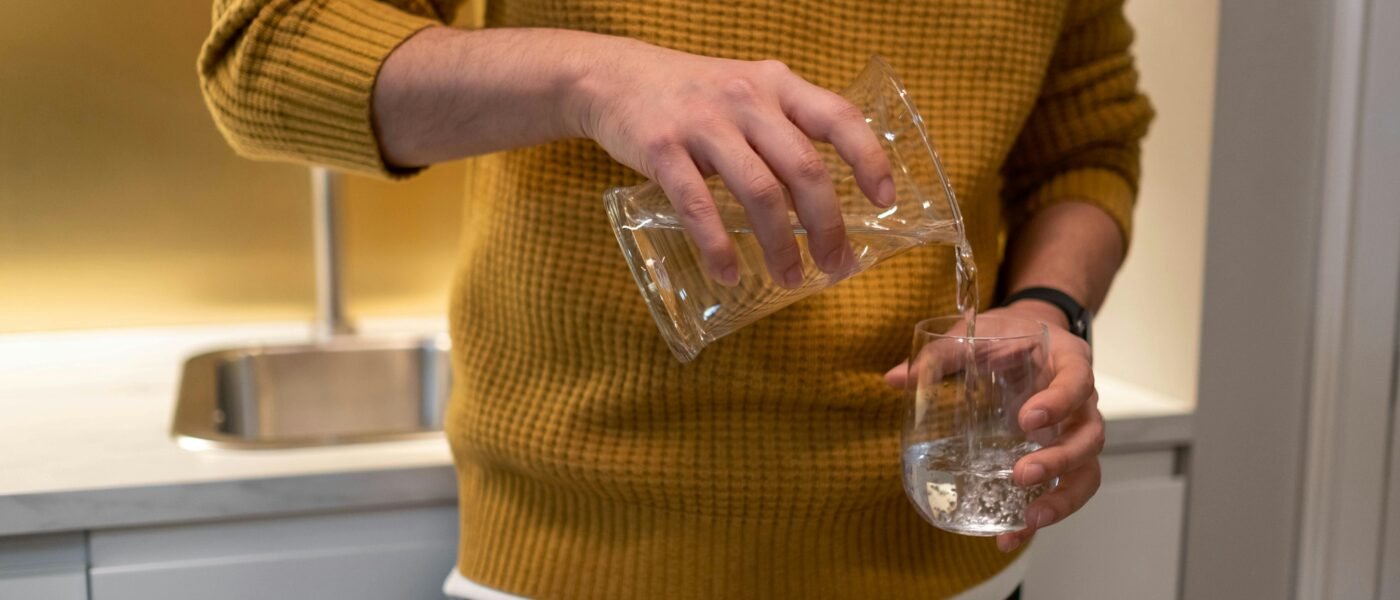
Microplastics have been found in tap water across every country tested. Water treatment plants remove some, but not all. This is everything you need to know about microplastics in your water, and exactly what to do about it.
The problem with your water
Most people assume their tap water is clean because it comes from a treatment plant. The treatment plant does its job. It removes bacteria, viruses, and most chemical contaminants. But it was never designed to remove microplastics. The pipes, filtration membranes, and distribution systems that water travels through before it reaches your tap can actually add plastic particles along the way.
The result: microplastics are present in tap water in virtually every city that has been tested. Bottled water is no safer. In most studies it’s worse, because the plastic bottle itself sheds particles into the water inside.
The good news is that this is one of the most solvable microplastics problems. The right water filter removes up to 99% of microplastics from your drinking water. You don’t need to overhaul your life, you need the right filter.
What’s in your water
Microplastics from the source
Water picks up microplastics long before it reaches a treatment plant. Rivers and lakes, the source water for most municipal supplies contain microplastics from stormwater runoff, industrial discharge, and plastic waste. The EPA has identified microplastics as an emerging contaminant in drinking water and is currently developing monitoring requirements for water systems across the US.
Microplastics from the pipes
Even after treatment, water travels through miles of distribution pipes before it reaches your tap many of which are made from PVC or other plastics. These pipes can leach microplastic particles directly into treated water. Older plumbing in homes adds another layer of risk.
Nanoplastics – the smaller problem
Microplastics get most of the attention, but nanoplastics, particles smaller than 1 micron, are increasingly the bigger concern. A 2024 Columbia University study found that bottled water contains an average of 240,000 plastic particles per litre, with around 90% being nanoplastics too small for older detection methods to find. Nanoplastics are small enough to cross cell membranes, something larger microplastics cannot do.
The only certification that matters
When shopping for a water filter, ignore most of what’s on the packaging. “Reduces impurities,” “advanced filtration,” and “cleaner water” are marketing language with no regulatory meaning.
The one thing to look for is NSF/ANSI 401 certification. This is the only standard that specifically tests for microplastics removal. It requires independent laboratory verification that a filter reduces particles in the 0.5–1 micron range by at least 85%. If a filter doesn’t carry this certification, there’s no verified evidence it removes microplastics, regardless of what the brand claims.
You can verify any filter’s NSF/ANSI 401 certification at info.nsf.org, the official NSF product database. If a filter isn’t listed there, the certification claim is unverified.
Filter types – what works and what doesn’t
| Filter type | Microplastics removal | Best for | Avg cost |
|---|---|---|---|
| Reverse osmosis (under-sink) | Up to 99% | Families, permanent homes | $200–$500 |
| Reverse osmosis (countertop) | Up to 99% | Renters, no-plumbing situations | $350–$500 |
| Certified pitcher (NSF 401) | ~85%+ | Budget, portability | $35–$90 |
| Faucet filter (NSF 401 certified) | ~85%+ | Easy installation, renters | $30–$60 |
| Standard carbon pitcher | Little to none | Taste only — not microplastics | $25–$50 |
| Standard fridge filter | Little to none | Taste only — not microplastics | $30–$60 |
Everything on this site about water
We’ve written detailed, research-backed guides on every aspect of microplastics in water. Start with the one most relevant to your situation.
Filter guides
- Best water filters for microplastics (2026) – our full ranked guide
- Reverse osmosis vs pitcher filters – which is right for you
- Best countertop water filters – no plumbing required
- Best under-sink RO systems (coming soon)
Water quality guides
- Is bottled water worse than tap for microplastics?
- Microplastics in tap water – what the science says
- How to read your water quality report (coming soon)
Our top filter picks
Not sure where to start? These are the three filters we’d recommend depending on your situation, all NSF/ANSI 401 certified, all independently tested.
Best overall – AquaTru Carafe
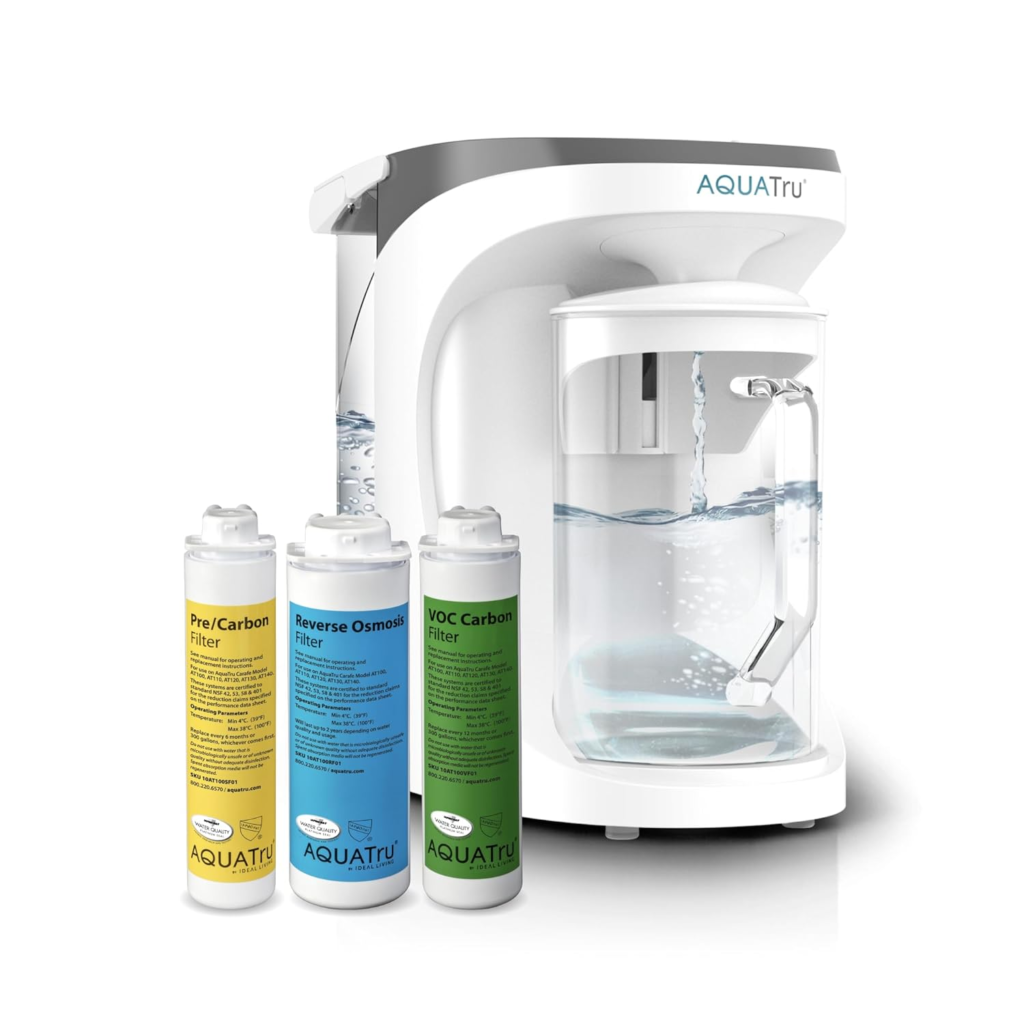
Countertop reverse osmosis, no plumbing required. Removes 99%+ of microplastics and stores filtered water in a glass carafe, so there’s no plastic contact post-filtration. The top-rated filter for microplastics in independent testing.
Best under-sink – Waterdrop G3P800
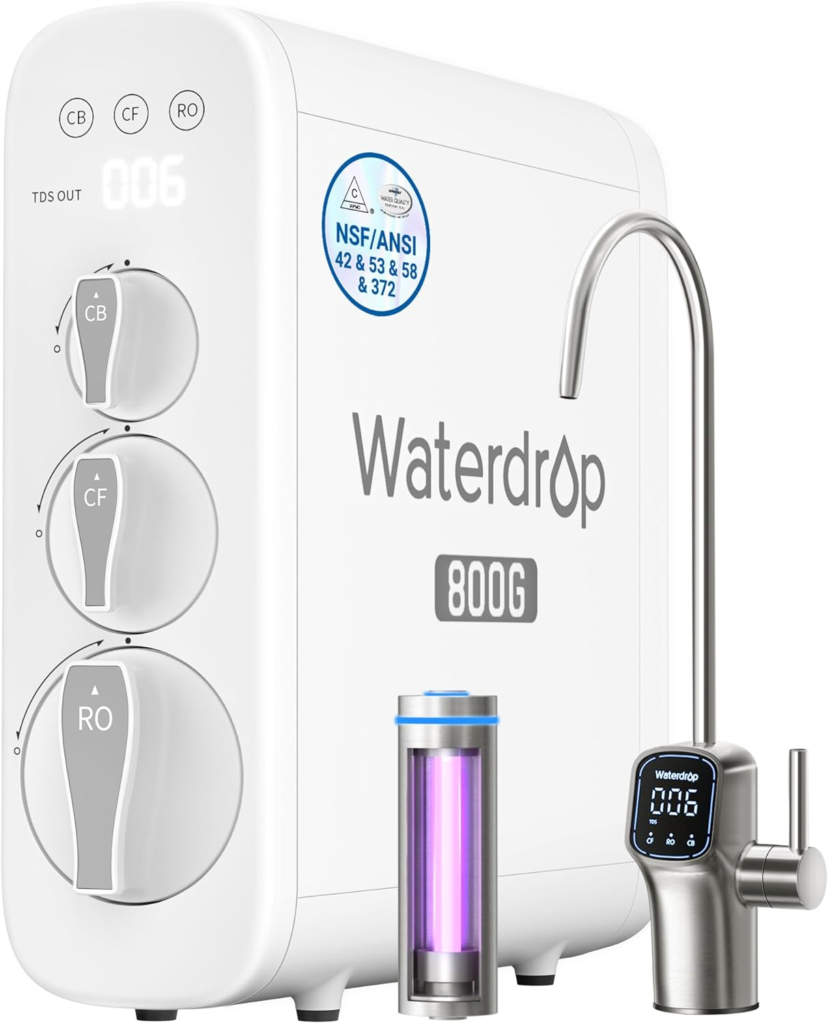
Tankless under-sink reverse osmosis with 800 GPD flow rate, fills a glass almost instantly. Lab tested to non-detect levels for microplastics. Best permanent solution for families.
Best budget — Clearly Filtered Pitcher
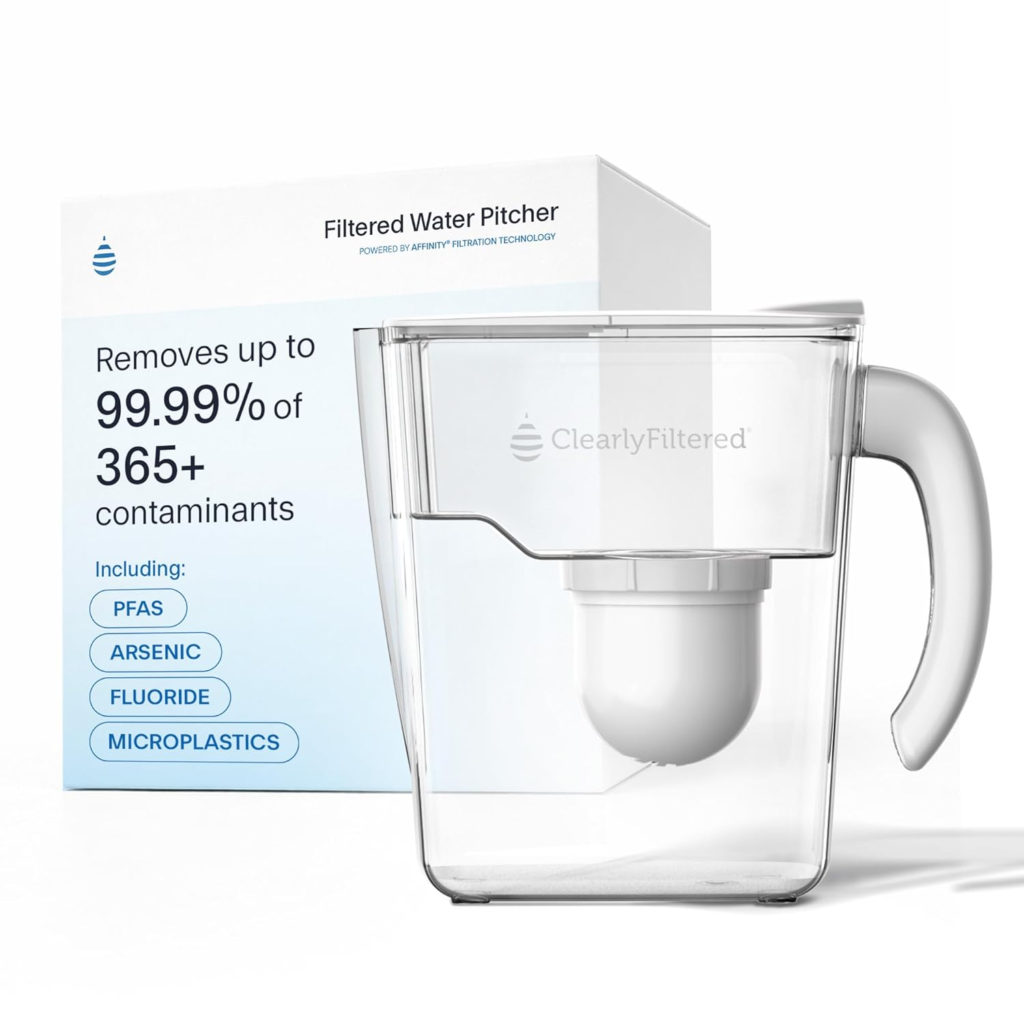
NSF/ANSI 401 certified pitcher filter. No installation, no plumbing. Removes 85%+ of microplastics along with 365+ other contaminants. The best non-RO option for renters and those on a budget.
Frequently asked questions
Does boiling tap water remove microplastics?
No. Boiling kills bacteria and viruses but has no effect on plastic particles. Microplastics don’t evaporate. They stay in the water or concentrate as water boils off. Only physical filtration removes them.
Is bottled water safer than tap water for microplastics?
No. And usually worse. Studies consistently find more microplastics in bottled water than tap water. The plastic bottle and cap shed particles directly into the water. Filtered tap water from a certified RO system is far cleaner than bottled water at a fraction of the cost.
How do I know if my current filter removes microplastics?
Check for NSF/ANSI 401 certification on the box or product page. If it’s not there, the filter is not certified to remove microplastics regardless of what the marketing claims. You can verify certifications at info.nsf.org.
Are microplastics in water harmful to health?
The research is still developing. Microplastics have been detected in human blood, lungs, placentas, and cardiovascular tissue. The WHO has called for more research into health effects. The precautionary principle suggests reducing exposure where possible. A good water filter is the most practical way to do that.
What is the difference between microplastics and nanoplastics?
Microplastics are plastic particles smaller than 5mm. Nanoplastics are even smaller, under 1 micron (0.001mm). Nanoplastics are more concerning because they’re small enough to penetrate cell membranes and cross the blood-brain barrier. A 2024 Columbia University study found nanoplastics are far more prevalent in bottled water than previously known, making up about 90% of all plastic particles detected.
Sources
- Qian N. et al. — Rapid single-particle chemical imaging of nanoplastics by SRS microscopy. Columbia University / Rutgers University. Proceedings of the National Academy of Sciences, January 2024.
- World Health Organization — Microplastics in drinking-water. WHO Report, 2019.
- Danopoulos E. et al. — Microplastic contamination of drinking water: A systematic review. PLOS ONE, July 2020.
- NSF International — NSF/ANSI 401: Emerging Contaminants standard. NSF.org.
- Food & Water Watch — The Mega-Crisis of Microplastics in Our Drinking Water. November 2024.
Some links on this page are affiliate links. We may earn a commission at no extra cost to you.