
Every time you wash synthetic clothing, your machine releases hundreds of thousands of microscopic plastic fibres into the water supply. Laundry is the single largest source of microplastics entering the ocean. Here’s what’s happening and what you can do about it today.
Why laundry is the biggest microplastics problem
Synthetic fabrics, polyester, nylon, acrylic, spandex are made from plastic. Every time these fabrics are washed, the mechanical action of the drum tears tiny fibres from the weave. Those fibres, typically less than 5mm long, flow out of the machine with the wastewater and straight into the sewer system.
A single wash load can release up to 1.5 million microplastic fibres. A 2024 global modelling study published in the Journal of Hazardous Materials estimated that machine washing accounts for an annual global emission of 5.69 million tons of microplastic fibres making laundry the single largest source of primary microplastics entering the ocean, responsible for approximately 35% of total emissions.
Most wastewater treatment plants remove 95–99% of microplastics from water. But because a single load produces millions of fibres, even 1% passing through represents hundreds of thousands of particles entering waterways per wash. And the fibres captured by treatment plants end up in sewage sludge, which is frequently spread on agricultural land as fertiliser, putting the fibres back into the soil and food chain.
What makes synthetic laundry worse
Not all laundry sheds equally. Research has identified several factors that significantly affect how many fibres are released per wash:
| Factor | Lower shedding | Higher shedding |
|---|---|---|
| Fabric type | Woven synthetics | Knit synthetics, fleece |
| Fabric age | Older, broken-in garments | Brand new garments |
| Water temperature | Cold wash (30°C or below) | Hot wash (60°C+) |
| Cycle type | Delicate / gentle cycle | Standard / heavy cycle |
| Spin speed | Lower RPM | Higher RPM |
| Detergent | Liquid detergent | Powder detergent (more abrasive) |
| Polyester type | Virgin polyester | Recycled polyester (sheds more) |
Recycled polyester, often marketed as the sustainable choice, sheds significantly more microplastic fibers than virgin polyester. The recycling process weakens the fibre structure. Recycled materials are still better than new plastic production overall, but worth knowing when making laundry decisions.
What you can do right now
1. Use a microfibre filter or catching device
This is the highest-impact single change you can make. There are three main types of device available to households right now. Each works differently and catches a different proportion of fibers.
| Device | How it works | Capture rate | Cost | Best for |
|---|---|---|---|---|
| Guppyfriend Washing Bag | Zip synthetic clothes inside the bag — fibres collect in the corners | 75–86% less shedding | ~$30 | Small/medium loads of synthetics |
| Cora Ball | Toss in the drum — stalks catch floating fibres | ~26–30% | ~$38 | Full mixed loads, large items |
| External hose filter (e.g. Filtrol) | Installs on the washing machine drain hose | Up to 89% | ~$140+ | Households wanting maximum capture |
2. Wash smarter
Simple habit changes significantly reduce fibre release without any equipment:
- Wash in cold water — hot water weakens fibres and increases shedding
- Use a gentle or delicate cycle — less mechanical agitation means fewer broken fibres
- Wash full loads — less friction between garments per item compared to small loads
- Use liquid detergent — powder detergent is more abrasive on fabric fibres
- Wash synthetic garments less frequently — spot clean where possible
- Air dry instead of tumble dry — tumble drying also generates fibres into the air
3. Buy less synthetic clothing
The most upstream solution is reducing the amount of synthetic fabric you own. Natural fibers like cotton, wool, linen, hemp do shed particles, but they are not synthetic plastics and do not carry the same chemical contamination concerns. When buying new clothing, prioritize natural fibre options for high-wash items like underwear, activewear base layers, and everyday t-shirts.
The regulatory picture – what’s coming
This issue is moving fast at the policy level. France became the first country to require microfibre filters in all new washing machines, with the requirement taking effect in 2025. The UK introduced a Microplastic Filters Bill in 2024 requiring the same for new machines. Australia plans to phase in filters by 2030.
In the US, the Fighting Fibers Act, introduced in July 2025, would mandate microplastic filters in all new US washing machines by 2030. It is currently under Senate committee review. Oregon has already passed a state-level requirement, and New Jersey, Illinois, and Pennsylvania have bills in progress.
The direction of travel is clear: built-in filters in all new washing machines within the next few years. Until then, retrofit solutions like the Guppyfriend and Cora Ball are the practical options for most households.
Our recommended products
Best overall — Guppyfriend Washing Bag
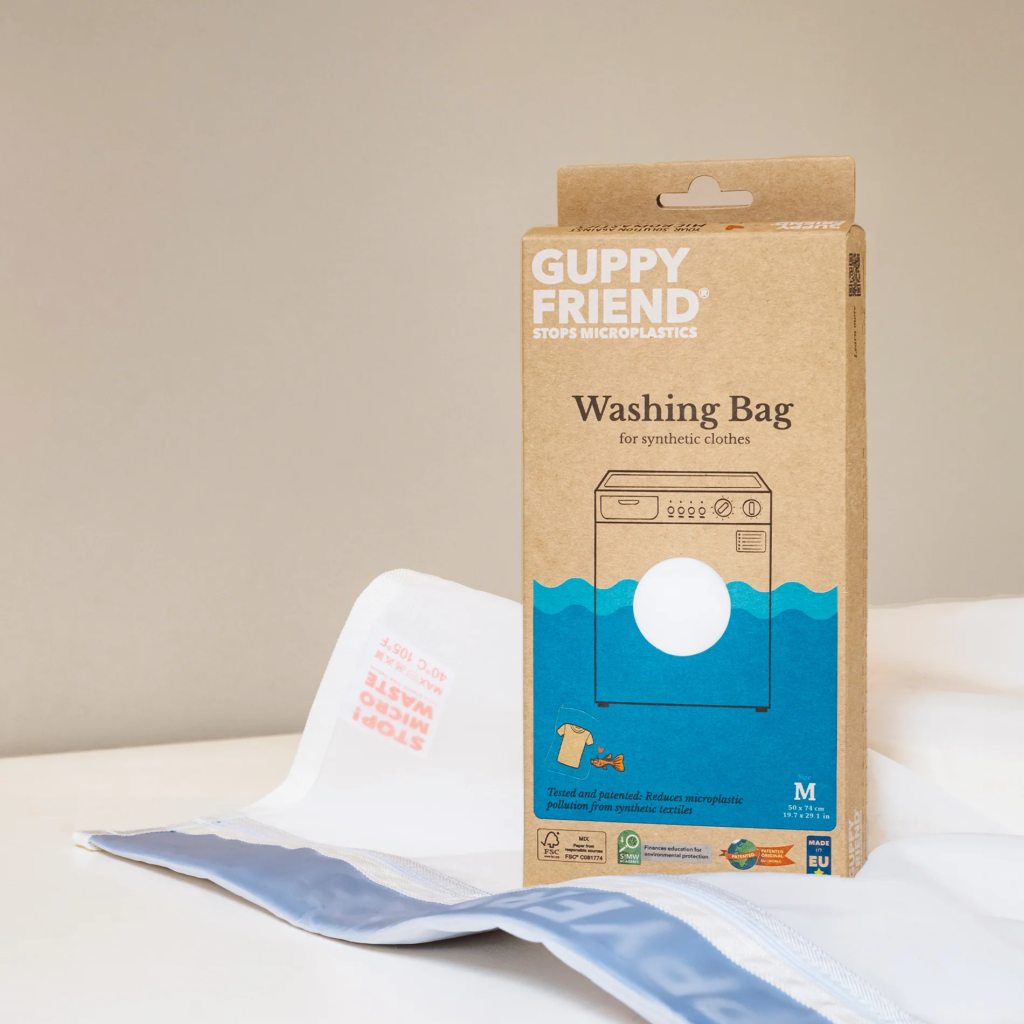
| Type | Laundry bag — zip synthetic clothes inside |
| Capture rate | Reduces fibre shedding by 75–86% |
| Size | 19.7″ × 29.1″ — fits a moderate load of synthetics |
| Material | Polyamide monofilament — does not shed fibres itself |
| Price | ~$30 |
The Guppyfriend is the best-tested and most widely recommended laundry microfibre solution available. Developed by the STOP! Micro Waste initiative and backed by Patagonia, it reduces fibre shedding by 75–86% in independent testing significantly better than the Cora Ball. Fibers collect in the bag’s corners after each wash and can be removed by hand and disposed of in the bin rather than the drain. The bag itself is made from polyamide monofilament, which does not shed fibres. Best for synthetic items like activewear, fleece, and nylon garments.
Don’t overfill the bag. Clothes need room to move to get clean. Fill it no more than two-thirds full, and use two bags for larger synthetic loads.
Best for full loads — Cora Ball
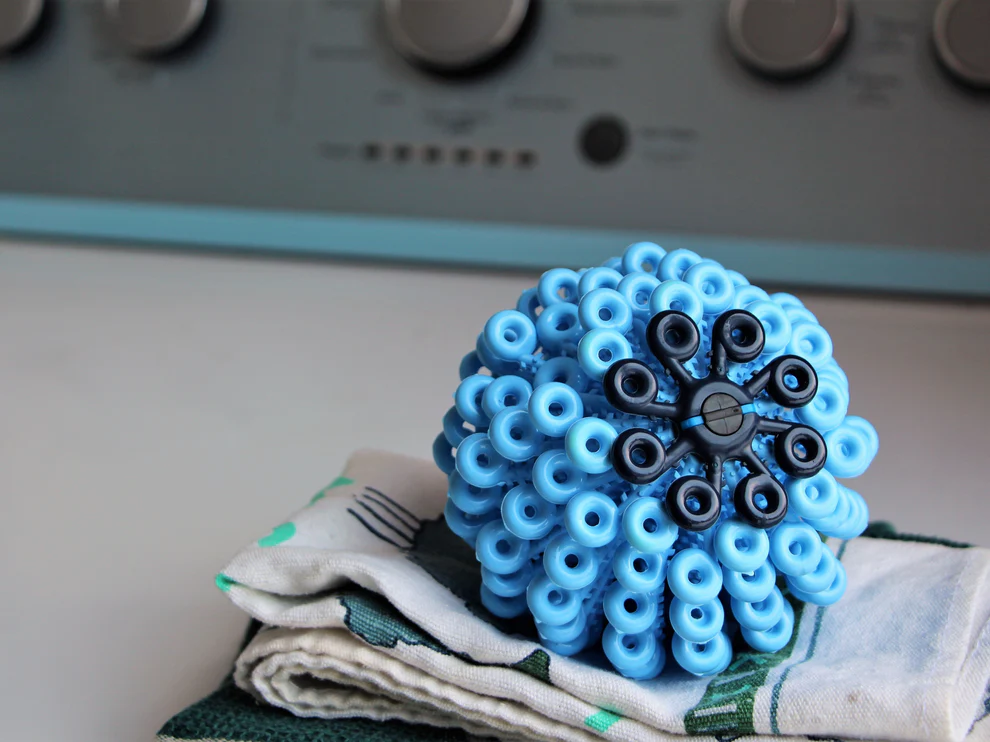
| Type | Laundry ball — toss in drum with clothes |
| Capture rate | ~26–30% of microfibers per load |
| Compatibility | Works with all load sizes including large items |
| Lifespan | No replacement needed — clean periodically |
| Price | ~$38 |
The Cora Ball captures fewer fibers than the Guppyfriend but has one significant practical advantage: you just throw it in the drum with everything else. No sorting, no separate loads. It works with any load size and catches fibers from all clothes simultaneously including items too large to fit in a bag like blankets, towels, and fleece jackets. The stalks are modeled on coral filtration and require periodic cleaning to remove accumulated fibers. Lower capture rate than the Guppyfriend but easier to use consistently, which matters more in practice.
Everything on this site about laundry
Guides
- Guppyfriend vs Cora Ball — full comparison (coming soon)
- Best external washing machine filters (coming soon)
- Does fabric softener make microplastic shedding worse? (coming soon)
Related topics
- Microplastics in your water — what laundry runoff ends up in
- Natural fabric alternatives to synthetics (coming soon)
- How to build a lower-plastic wardrobe (coming soon)
Frequently asked questions
Does the Guppyfriend work with top-loading washing machines?
Yes. the Guppyfriend works with both front-loading and top-loading machines. The bag is designed to handle the agitator action in top-loaders. Fill it no more than two-thirds full to ensure clothes get properly clean.
Does washing natural fibers like cotton release microplastics?
Cotton and other natural fibers do shed particles during washing, but these are cellulose fibres, not synthetic plastic. They biodegrade in the environment and do not carry the same chemical contamination concerns as polyester or nylon microfibers. Natural fibers are not microplastic-free from a particle count perspective, but they are significantly less harmful environmentally.
Does my dryer also release microplastics?
Yes — tumble drying also generates microfiber particles, which exit through the dryer vent into the air rather than the water supply. Studies have found microplastics in outdoor air near residential dryer vents. Air drying is the lower-impact option. Dryer lint traps catch some fibers but are not designed to capture the smallest particles.
Is recycled polyester clothing better or worse for microplastics?
Recycled polyester sheds more microfibers than virgin polyester because the recycling process weakens the fibre structure. This doesn’t mean you should avoid recycled materials from a lifecycle perspective, using recycled plastic rather than new is still better for overall plastic production. But it’s worth knowing when deciding how often to wash recycled synthetic garments and whether to use a filter bag.
When will washing machines be required to have built-in filters in the US?
The Fighting Fibers Act introduced in July 2025 would require microplastic filters in all new US washing machines by 2030, but it is still under Senate committee review. Oregon has already passed a state-level requirement effective 2030. Several other states including New Jersey, Illinois, and Pennsylvania have bills pending. The EU and France already have requirements in place for new machines.
Sources
- Zhang K. et al. — Global microplastic fiber pollution from domestic laundry. Journal of Hazardous Materials, 2024.
- Eamrat R. et al. — Unveiling microfiber emissions: A comprehensive analysis of household washing activities and mitigation measures. Case Studies in Chemical and Environmental Engineering, June 2025.
- De Falco F. et al. — The contribution of washing processes of synthetic clothes to microplastic pollution. Scientific Reports, 2019.
- IUCN — Primary Microplastics in the Oceans. IUCN Report, 2017. (35% ocean microplastics from synthetic textiles)
- PBS NewsHour — Laundry is a top source of microplastic pollution. January 2024.
- CLEANR / Shaw Institute — VORTX filter independent testing data. 2025.
Some links on this page are affiliate links. We may earn a commission at no extra cost to you. We only recommend products we’d use ourselves.