
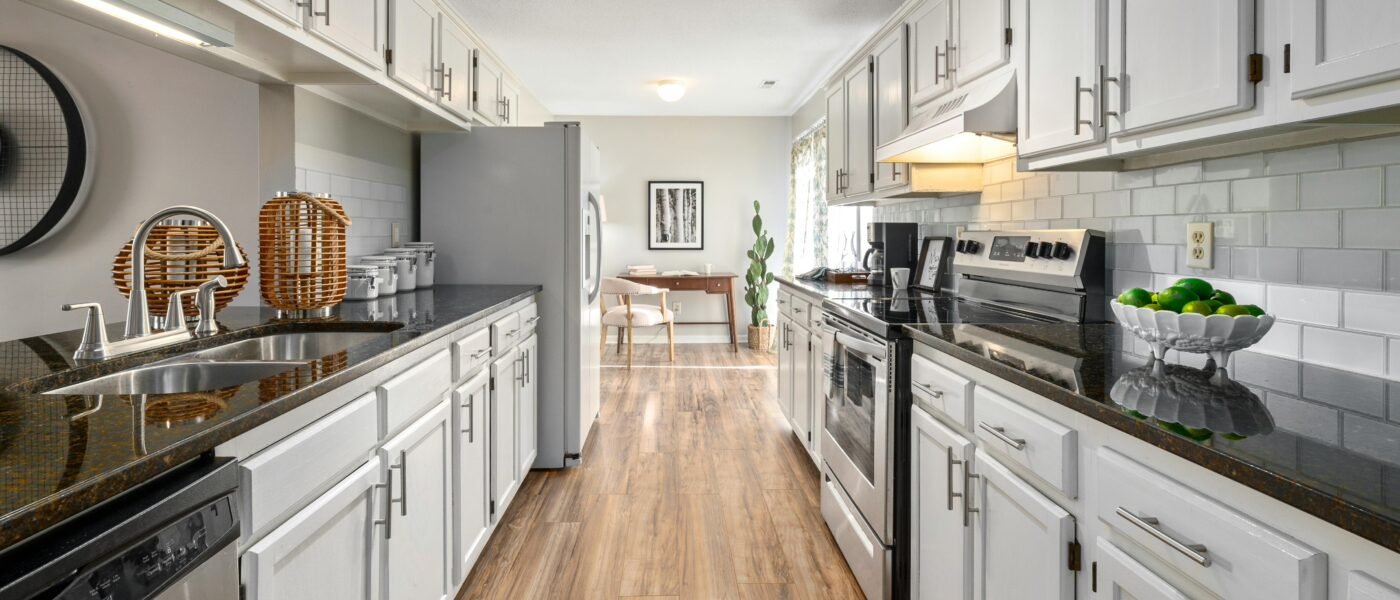
Your kitchen is one of the biggest sources of microplastics in your diet and most of it has nothing to do with the food itself. It’s the equipment you use to prepare it. Here’s what the research says and the swaps that actually make a difference.
The kitchen microplastics problem
Most people thinking about microplastics focus on water and packaging. The kitchen itself, the cutting boards, cookware, storage containers, and utensils used to prepare food every day, is an equally significant source that gets far less attention.
A 2024 review published in Heliyon found that mechanical, physical, and chemical processes during food preparation all contribute to microplastic release, challenging the assumption that kitchen exposure is solely tied to food products or packaging. The researchers concluded that the selection of preparation tools, storage methods, and cooking procedures can significantly affect how many microplastics end up on your plate.
The good news: the kitchen is also where swaps are relatively easy and affordable. You don’t need to replace everything at once. The highest-impact changes are well documented and we’ve ranked them below by how much difference they actually make.
The biggest sources of microplastics in your kitchen
1. Plastic cutting boards
Plastic cutting boards are one of the most significant and most overlooked sources of dietary microplastics. A study published in Environmental Science & Technology found that food preparation on a plastic cutting board could release between 14 and 79 million microplastic particles per year, enough to make it a meaningful daily exposure source for most households.
Polypropylene boards shed more than polyethylene, and chopping style, force, and frequency all affect the release rate. The more worn and scratched a board is, the more it sheds. A 2025 study in Environmental Health Perspectives found that long-term exposure to microplastics from cutting boards caused measurable changes to intestinal inflammation and gut microbiota in mice.
The swap: Wooden or bamboo cutting boards. Wooden boards do shed microparticles but they are not plastic. Wood particles do not carry the same chemical concerns as synthetic polymers. Glass boards are another option for smaller prep tasks, though they dull knives faster.
2. Non-stick cookware
Non-stick pans, rice cookers, and utensils coated in PTFE (polytetrafluoroethylene, the material marketed as Teflon) can release micro and nanoplastic particles when the coating is scratched, abraded, or heated above safe temperatures. A 2024 Plymouth Marine Laboratory study found that plastic and non-stick cookware could contribute between 2,400 and 5,000 microplastic particles per year into homemade food and that old, worn cookware was significantly worse than new.
The key risk factors are using metal utensils on non-stick surfaces, overheating (above 260°C / 500°F), and using pans with scratched or peeling coatings.
The swap: Cast iron, stainless steel, or carbon steel cookware. These release no microplastics and last decades. If you prefer non-stick, ceramic-coated pans (free of PTFE) are a lower-risk alternative, though the long-term durability of ceramic coatings is less well studied.
3. Plastic food storage containers
Plastic containers used to store and reheat food are a significant exposure source, particularly when used in the microwave. Research has found that heating plastic dramatically accelerates the release of microplastics and chemical additives. A 2025 study found that disposable plastic cups filled with near-boiling water released 50% more microplastics than those filled with cooler water.
Even without heat, older and scratched plastic containers shed more microplastics than newer ones. The type of plastic matters too. Polypropylene (PP, recycling code #5) and polyethylene (HDPE, code #2) are considered lower risk than polycarbonate (PC, code #7) or PVC (code #3).
The swap: Glass or stainless steel containers. Both are inert. They don’t leach regardless of heat or age. Glass containers with locking lids are widely available and work for both storage and microwave reheating. Never microwave food in plastic containers, even those labelled “microwave safe”. That label refers to the container not melting, not to it being safe from microplastic release.
4. Plastic utensils and stirring spoons
Plastic spatulas, stirring spoons, ladles, and whisks all shed microplastics during use, particularly when used at high temperatures or with abrasive force. Melamine utensils (common in kitchenware sets) are a particular concern: UV exposure and heat cause melamine-formaldehyde resin to release chemical additives into food at significantly higher levels than other plastic types.
The swap: Wooden, bamboo, or stainless steel utensils. Silicone is a lower-risk plastic alternative. It is more stable at high temperatures than most thermoplastics, though it is still a synthetic polymer.
5. Plastic kettles and appliances
A 2025 study found that boiling water in a new plastic kettle produces between 6 and 8 million microplastic particles per cup. The good news: the number drops dramatically with each successive boil by the 40th use, the release had dropped to around 11% of the initial level. Older plastic kettles that have been used many times are much less of a concern than brand new ones.
The swap: Stainless steel or glass kettles. If you have a plastic kettle, run it through 40+ boil cycles before using the water for drinking, or just switch to stainless steel and avoid the problem entirely.
Kitchen microplastics: what matters most
If you can’t change everything at once, prioritise in this order based on exposure volume and ease of swap:
| Item | Risk level | Swap to | Cost of swap |
|---|---|---|---|
| Plastic cutting board | High | Wooden or bamboo board | $20–$60 |
| Non-stick cookware (scratched) | High | Cast iron or stainless steel | $30–$150 |
| Plastic containers (microwaved) | High | Glass containers | $25–$60 for a set |
| Plastic utensils | Medium | Wood or stainless steel | $15–$40 |
| Plastic kettle (new) | Medium | Stainless steel kettle | $30–$80 |
| Non-stick cookware (unscratched) | Lower | Use until worn, then replace | — |
What’s on this site about kitchen microplastics
Cookware guides
- Best plastic-free cookware sets (coming soon)
- Cast iron vs stainless steel — which is right for you (coming soon)
- Are ceramic pans actually safe? (coming soon)
Storage & prep guides
- Best plastic-free food storage containers (coming soon)
- Wood vs plastic cutting boards — the full comparison (coming soon)
- Plastic-free kitchen starter kit (coming soon)
Our recommended swaps
One verified, well-reviewed product per category chosen for quality, not commission rate. All available on Amazon.
Cutting board — Greener Chef Extra Large Bamboo Board
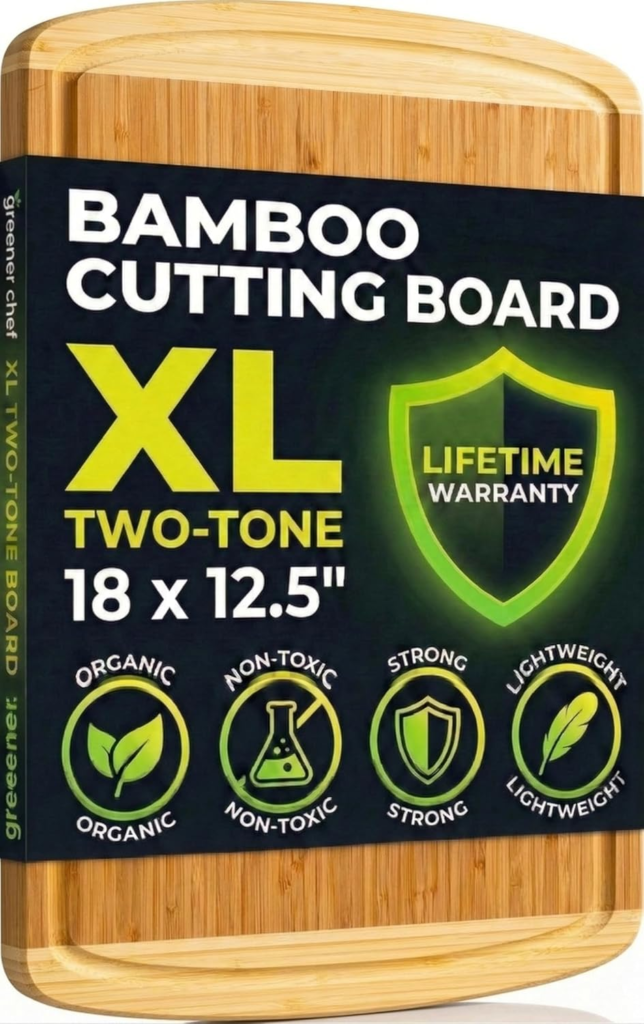
| Material | 100% organic bamboo — no formaldehyde glue |
| Size | 18″ × 12″ — large enough for most prep tasks |
| Notable | Lifetime replacement guarantee, FSC certified |
| Price | ~$35–$45 |
Bamboo is harder than most woods so it resists knife scarring, the primary driver of microplastic-like particle release from wooden boards. The Greener Chef uses vertical grain construction for added strength and comes with a lifetime replacement guarantee. No formaldehyde-based adhesives.
Cookware — Lodge 10.25″ Cast Iron Skillet
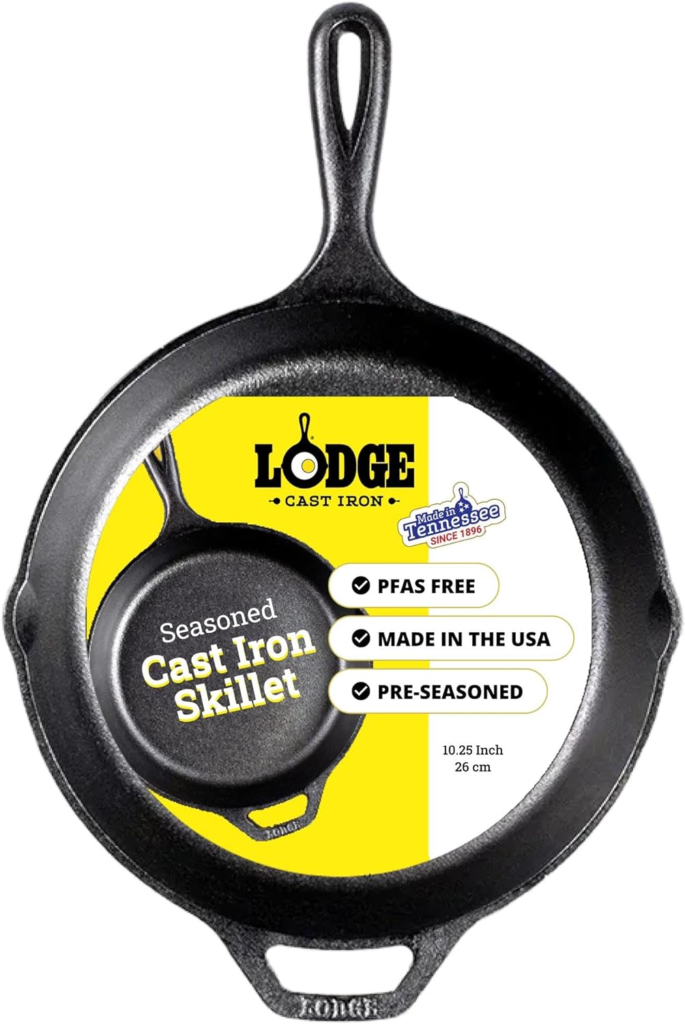
| Material | Cast iron — zero synthetic coatings |
| Size | 10.25″ — right for most households |
| Notable | PFAS-free, PTFE-free, pre-seasoned with vegetable oil |
| Price | ~$20–$30 |
Made in the USA since 1896. Lodge is pre-seasoned with 100% natural vegetable oil – no synthetic coatings, no PFAS, no PTFE. The seasoning improves with every use rather than degrading like non-stick coatings. One of the best-reviewed skillets on Amazon with over 100,000 ratings. Induction, oven, stovetop, and campfire compatible.
Food storage — Pyrex Simply Store 18-Piece Glass Set
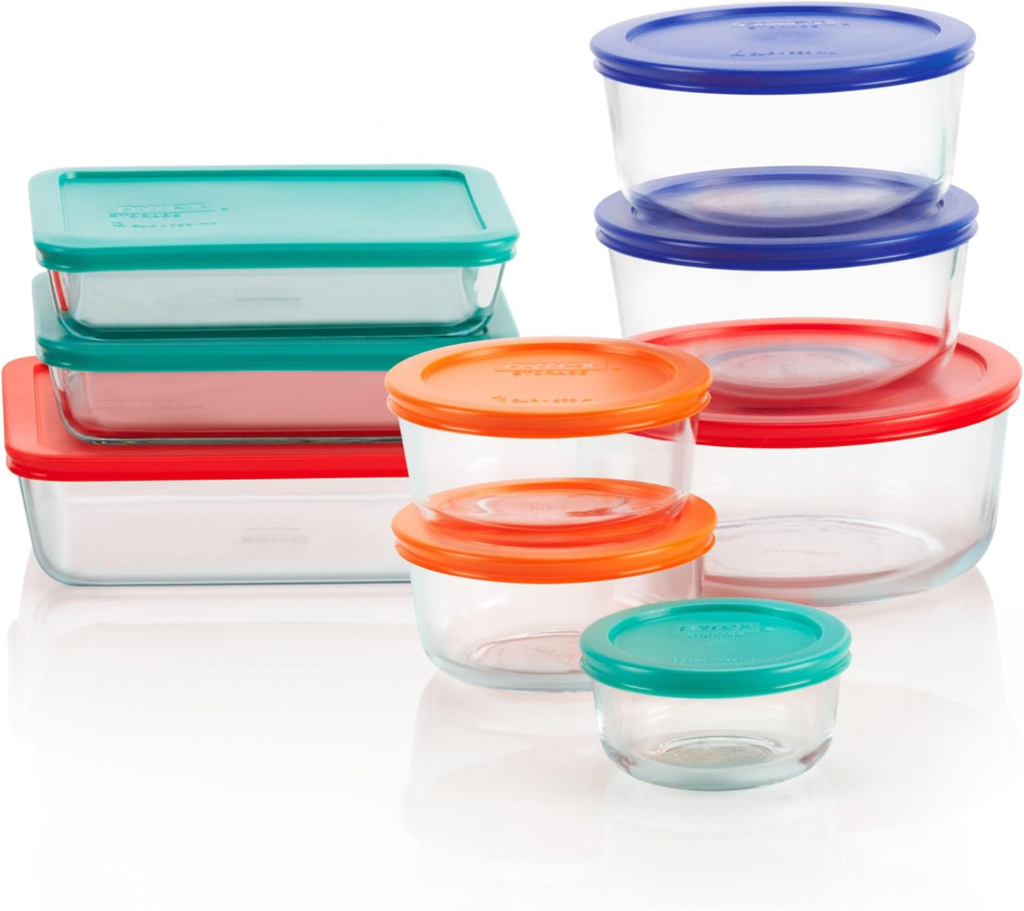
| Material | Tempered borosilicate glass — non-porous, inert |
| Set includes | 9 glass containers in mixed sizes + lids |
| Notable | Microwave, freezer, dishwasher safe. BPA-free lids. |
| Price | ~$35–$50 for the 18-piece set |
Pyrex tempered glass is non-porous and completely inert It doesn’t leach regardless of heat, age, or what’s stored in it. The lids are BPA-free plastic, so for complete plastic avoidance don’t fill containers to the brim. Microwave, dishwasher, and freezer safe. A trusted brand with decades of reliability. The 18-piece set covers most household storage needs.
The lids are plastic. When microwaving, leave a small gap between the food and the lid to avoid contact, or remove the lid entirely and cover with a microwave-safe plate.
Frequently asked questions
Is silicone cookware safe from microplastics?
Silicone is significantly more stable at high temperatures than most thermoplastics and is generally considered a lower-risk alternative to plastic cookware. However, it is still a synthetic polymer and some studies have found that silicone can release low levels of chemical additives under certain conditions. It is a meaningful improvement over plastic but not in the same category as cast iron, stainless steel, or glass.
Does washing plastic containers in the dishwasher make things worse?
Yes. High heat and strong detergents in dishwashers can degrade plastic containers faster than hand washing, increasing microplastic shedding over time. If you’re using plastic containers, hand washing in cool water is lower risk. The better solution is switching to glass or stainless steel containers, which are fully dishwasher safe with no microplastic concern.
Are bamboo cutting boards actually better than plastic?
Yes, in terms of microplastic exposure. Bamboo boards don’t shed synthetic plastic particles. They do require more maintenance than plastic, they need occasional oiling, and shouldn’t be left soaking in water. Some bamboo boards use adhesives that contain formaldehyde, so look for boards that specify formaldehyde-free glue if this concerns you.
Can I keep using my non-stick pan if it isn’t scratched?
An unscratched non-stick pan in good condition poses significantly lower risk than a scratched one. The research shows that degradation, scratches, peeling, staining, etc. is the primary driver of microplastic release from non-stick cookware. Use wooden or silicone utensils, avoid high heat, and hand wash rather than using the dishwasher. Replace it when you start to see wear.
What about canned food? Does the lining add microplastics?
Most tin cans are lined with an epoxy resin coating (often containing BPA or BPA alternatives) that can leach into food, particularly acidic foods like tomatoes. This is a chemical contamination concern rather than a microplastic one, though the distinction matters less in practice. Both are reasons to favour fresh or glass-jarred food where possible.
Sources
- Cole M. et al. — Microplastic and PTFE contamination of food from cookware. Plymouth Marine Laboratory / NORCE Norwegian Research Centre / NIVA Norway. 2024.
- Yadav H. et al. — Cutting Boards: An Overlooked Source of Microplastics in Human Food? Environmental Science & Technology, 2023.
- Iskander S.M. et al. — Cutting boards can produce microparticles when chopping vegetables. Environmental Science & Technology, 2023. (via ScienceDaily)
- Nanjing University / University of South Australia — Simulated Microplastic Release from Cutting Boards and Evaluation of Intestinal Inflammation and Gut Microbiota in Mice. Environmental Health Perspectives, 2025.
- Lusher A. et al. (NIVA Norway / PML / NORCE) — reviewed in How Microplastics Get Into Our Food. Scientific American, March 2025.
- ScienceDirect narrative review — Beyond the food on your plate: Investigating sources of microplastic contamination in home kitchens. Heliyon, August 2024.
Some links on this page may be affiliate links. We may earn a commission at no extra cost to you. We only recommend products we’d use ourselves.