
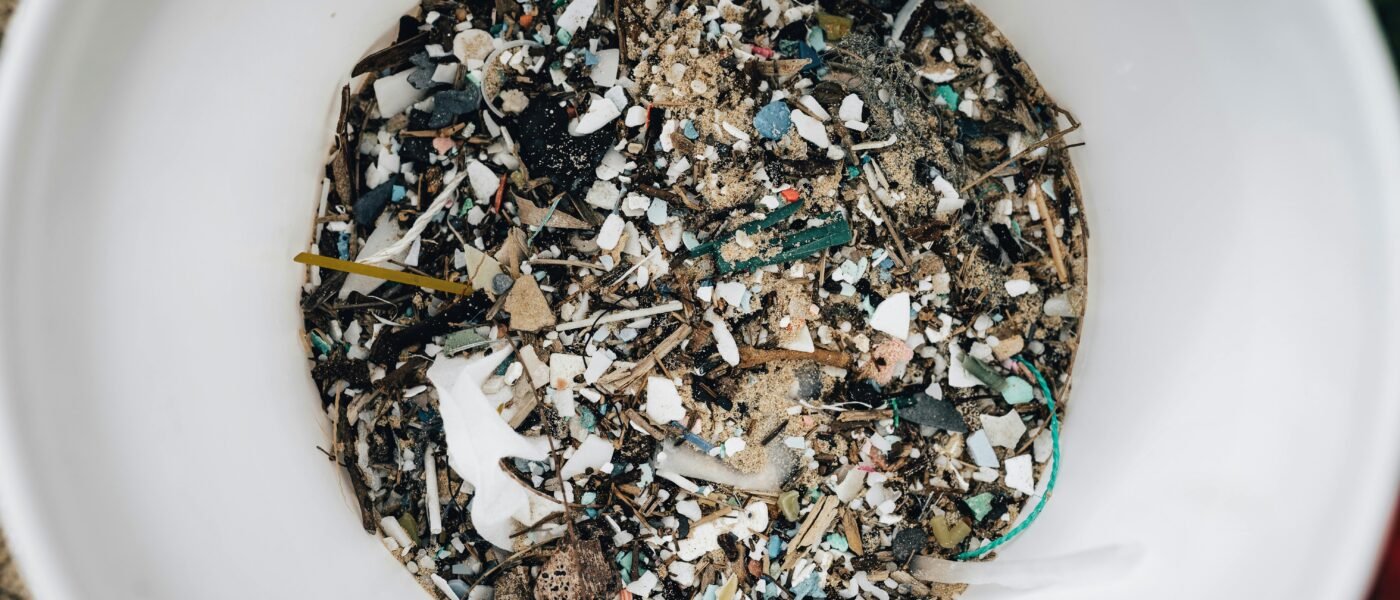
You turn on the faucet, fill a glass, and drink. Simple, right? But researchers around the world are finding something invisible in that water, tiny plastic fragments that your municipal treatment plant wasn’t designed to stop. This article breaks down what microplastics in tap water actually are, where they come from, how much is in your water, what (if anything) that means for your health, and most importantly, what actually works to remove them.
What Are Microplastics?
Microplastics are plastic particles smaller than 5 millimeters, some invisible to the naked eye. They come in two varieties:
- Primary microplastics – manufactured at a tiny size from the start (think microbeads in old face scrubs, synthetic fibers from clothing, or plastic pellets used in manufacturing).
- Secondary microplastics – larger plastic items (bottles, bags, packaging) that break down over time from UV exposure, heat, and physical erosion into ever-smaller fragments.
Nanoplastics are a subset of microplastics, particles smaller than 1 micrometer. They’re harder to detect and potentially more concerning because their tiny size may allow them to cross biological barriers more easily.
How Do Microplastics Get Into Tap Water?
Tap water goes through a treatment process before it reaches your glass, but that process was designed to handle bacteria, viruses, and chemical contaminants, not fragments of plastic measuring a fraction of a human hair. Here’s how microplastics enter the system:
1. Contaminated Source Water
Rivers, lakes, and reservoirs: the sources most municipal systems draw from, are already loaded with microplastics from agricultural runoff, stormwater, and plastic waste degradation. Researchers have found microplastics even in remote alpine lakes and Antarctic snow, which tells you how pervasive this contamination already is.
2. The Distribution System Itself
Here’s something surprising: in some regions, microplastic levels can actually be higher at the tap than at the treatment plant. Aging plastic pipes, plastic fittings, and PVC components in water distribution systems can shed particles as water flows through them.
3. Airborne Contamination
Microplastic fibers are also found in indoor and outdoor air. Open water storage containers, glasses left on a countertop, or even the process of pouring water can introduce airborne plastic fibers.
How Much Is Actually in Your Tap Water?
Studies vary widely depending on location, methodology, and what particle sizes are being counted, but the numbers paint a consistent picture: microplastics are in tap water, everywhere.
- A global study found that up to 83% of tap water samples worldwide contained microplastic fibers, with the U.S. clocking in at a notably high rate.
- Reported concentrations in tap water range from essentially trace amounts up to hundreds of particles per liter, depending on geography and pipe infrastructure.
- A 2025 peer-reviewed study found that modern water treatment plants are highly effective, achieving 97–98% removal of microplastics from raw source water, but trace amounts still make it through to household taps.
- The most common plastic types detected in tap water are polyethylene (PE), polyvinyl chloride (PVC), and polyethylene terephthalate (PET).
One important nuance: tap water generally contains far fewer microplastics than bottled water. Multiple studies have confirmed that plastic packaging is itself a major source of contamination, meaning switching to bottled water is not a solution. (We cover this in depth in our separate article: Is Bottled Water Worse Than Tap Water for Microplastics?)
What Are the Health Risks?
This is where honesty matters. The science is evolving rapidly, and we want to give you an accurate picture — not alarm you with speculation, and not dismiss real concerns.
What We Know
Microplastics have been found in human blood, lung tissue, placental tissue, breast milk, testicular tissue, and arterial plaques. A landmark 2025 study published in Nature Medicine confirmed their presence in human brain, liver, and kidney tissue, and found that concentrations in brain tissue were measurably higher in 2024 samples compared to 2016 samples, suggesting accumulation is increasing over time. Age, sex, and other demographic factors were not significant variables. The contamination was essentially universal in the samples studied.
In animal studies, microplastics have been associated with inflammation, oxidative stress, disruption of the gut microbiome, and interference with reproductive hormones. Some plastic particles and their associated chemical additives (like phthalates and bisphenols) are known endocrine disruptors.
What We Don’t Know Yet
What we don’t yet have is definitive clinical evidence in humans linking microplastic ingestion specifically through drinking water to specific disease outcomes. The World Health Organization has noted this research gap and called for more investment in human health research. The honest position is: we know microplastics accumulate in the body, we know they carry concerning chemicals, and we know animal studies show harm, but the full picture of human health impact is still being written.
Given the trajectory of the evidence, reducing exposure seems like a reasonable precaution. The good news: it’s achievable.
What Actually Removes Microplastics From Tap Water?
Not all filtration is created equal when it comes to microplastics. Here’s a quick breakdown of the main options, from least to most effective:
No | Standard Carbon Pitcher Filters (e.g., basic Brita)
Activated carbon filters are great at improving taste and removing chlorine. But their pore sizes are typically 0.5–1.0 microns, large enough for many microplastic particles to pass right through. Standard pitcher filters are not reliable for microplastic reduction unless they include an additional membrane filtration stage.
Partial | Certified Pitcher Filters With Membrane Filtration
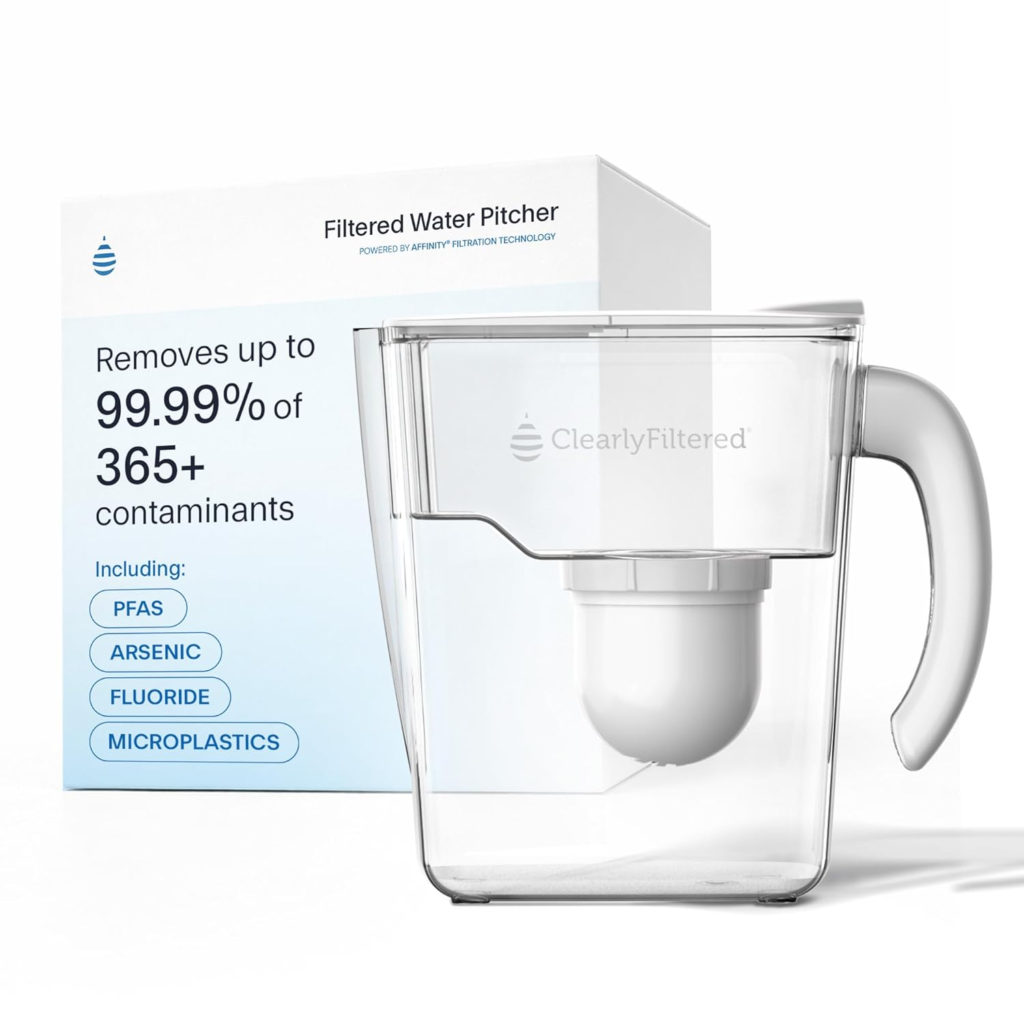
Some pitcher-style filters, like the Clearly Filtered Pitcher, use sub-micron filtration that goes well beyond carbon alone. These are a solid mid-range option for households that can’t install an under-sink system. Look for NSF/ANSI 401 certification, which confirms at least 85% reduction of particles in the 0.5–1.0 micron range.
Yes | Reverse Osmosis (RO) – The Gold Standard
Reverse osmosis systems use a semi-permeable membrane with pore sizes around 0.0001 microns, thousands of times smaller than even the tiniest microplastic fragments. Research consistently shows RO membranes remove upwards of 99% of microplastics and nanoplastics from drinking water. They also remove PFAS, heavy metals, nitrates, and hundreds of other contaminants in a single system.
Two certified RO options worth considering:
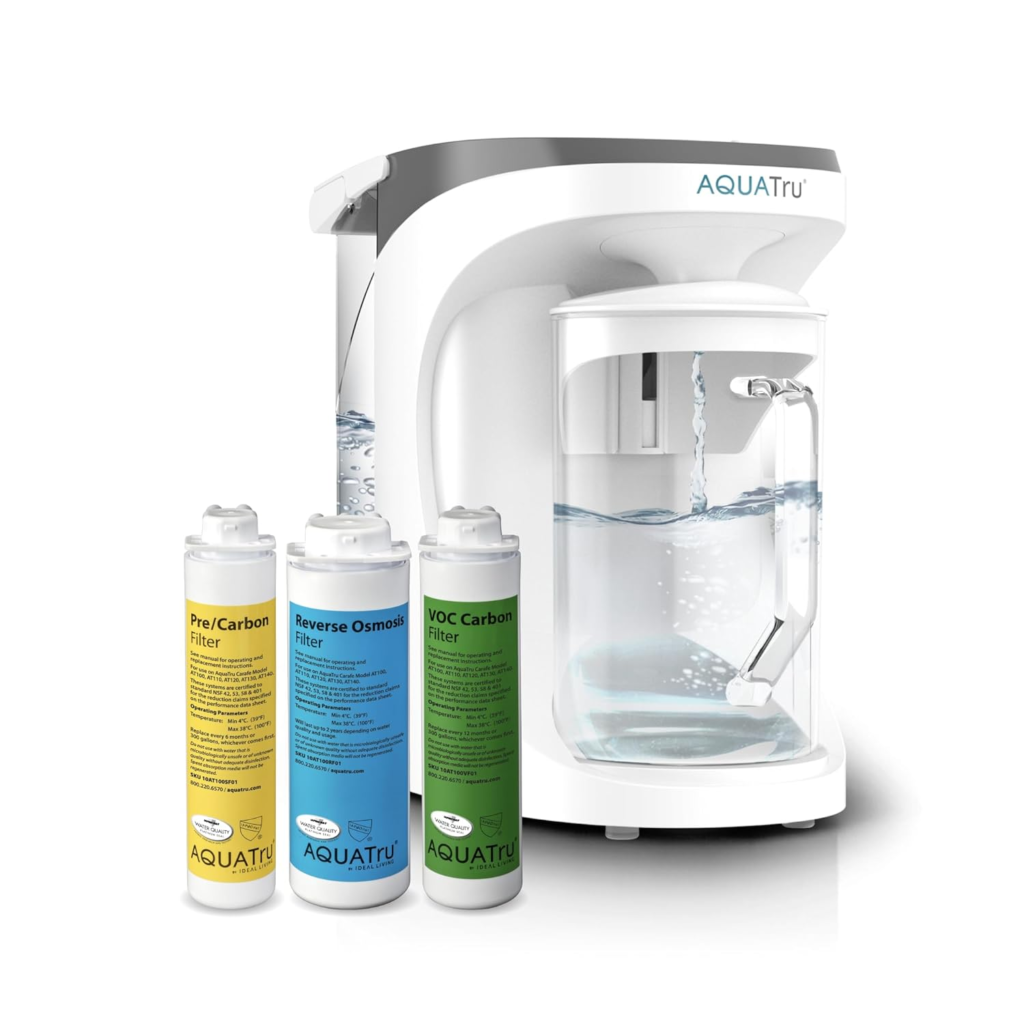
- AquaTru Carafe – A countertop RO system with no plumbing required. It’s the only filter we know of that is independently certified to NSF 42, 53, 58, and 401 for every single contaminant it claims to reduce, 86 total. The glass carafe design means purified water isn’t stored in plastic.
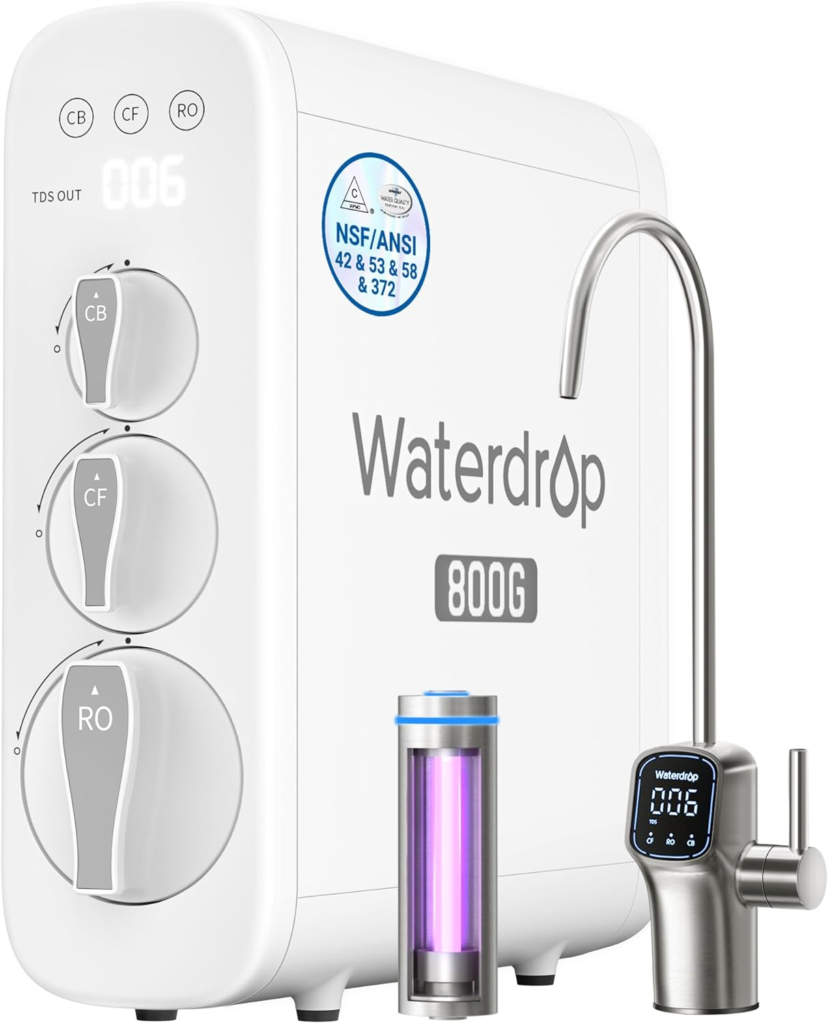
- Waterdrop G3P800 – A tankless under-sink RO system with an 800 GPD flow rate and smart filter life monitoring. A strong choice for households wanting a permanent, high-volume solution.
Boiling Water: A Free (Partial) Solution
A 2024 study published in Environmental Science & Technology Letters found that boiling tap water can remove a meaningful percentage of microplastics, particularly in hard water areas. When water boils, calcium carbonate forms and physically encapsulates plastic particles, which then settle as limescale. Straining the cooled water through a fine cloth or coffee filter before drinking can remove up to 80–90% of nano- and microplastics in some hard water samples.
It’s not a replacement for a proper filtration system. It’s less effective in soft water and more time-consuming, but it’s a no-cost option anyone can implement immediately.
Quick Reference: Filter Types and Microplastic Removal
| Filter Type | Effective for Microplastics? | NSF Standard to Look For |
|---|---|---|
| Basic carbon pitcher (Brita, PUR standard) | No | – |
| Certified pitcher with membrane (Clearly Filtered) | Partial / Yes with certification | NSF/ANSI 401 |
| Reverse osmosis countertop (AquaTru) | Yes – 99%+ | NSF 401 + NSF 58 |
| Reverse osmosis under-sink (Waterdrop, APEC) | Yes – 99%+ | NSF 401 + NSF 58 |
| Boiling + straining | Partial (hard water only) | – |
The Bottom Line
Microplastics are in tap water. That’s not alarmism, it’s well-documented science confirmed across hundreds of peer-reviewed studies. Municipal water treatment removes the majority of them, but trace amounts consistently make it to your tap. The health implications are still being studied, but the direction of the evidence is not reassuring.
The practical takeaway: if you want to meaningfully reduce your exposure, a certified reverse osmosis system, countertop or under-sink, is the most reliable solution available. Look for NSF/ANSI 401 certification as your baseline trust signal. And if you’re not ready to invest in a filter yet, at minimum stop reaching for bottled water as an alternative, the science consistently shows it’s worse, not better.
Sources
- Heußner et al. (2025). Microplastics in drinking water: quantitative analysis from source to tap by Py-GC–MS. Environmental Science and Pollution Research. PMC full text
- Luo et al. (2024). Microplastics and nanoplastics in drinking water and beverages: occurrence and human exposure. Journal of Environmental Exposure and Assessment. Full text
- Bhatt et al. (2024). Microplastics in water: Occurrence, fate and removal. ScienceDirect. Full text
- World Health Organization (2019). Microplastics in drinking-water. WHO Report
- Yu et al. (2024). Drinking Boiled Tap Water Reduces Human Intake of Nanoplastics and Microplastics. Environmental Science & Technology Letters. ACS publication
- Nguyen et al. (2023). Microplastic Removal from Drinking Water Using Point-of-Use Devices. PMC. PMC full text
- Hossain et al. (2024). Microplastic accumulation, morpho-polymer characterization, and dietary exposure in urban tap water of a developing nation. Frontiers in Sustainable Food Systems. Full text
Affiliate disclosure: Some links in this article are affiliate links. If you purchase through them, nononano.com may earn a small commission at no extra cost to you. We only recommend products with independent NSF certification for microplastic removal.