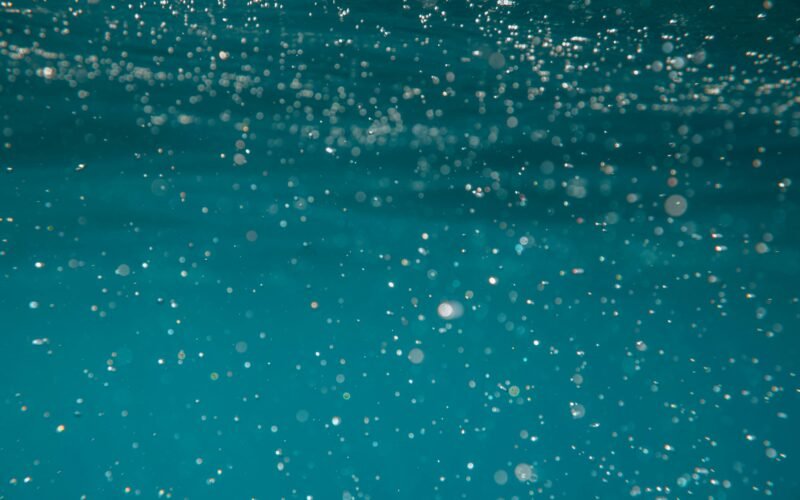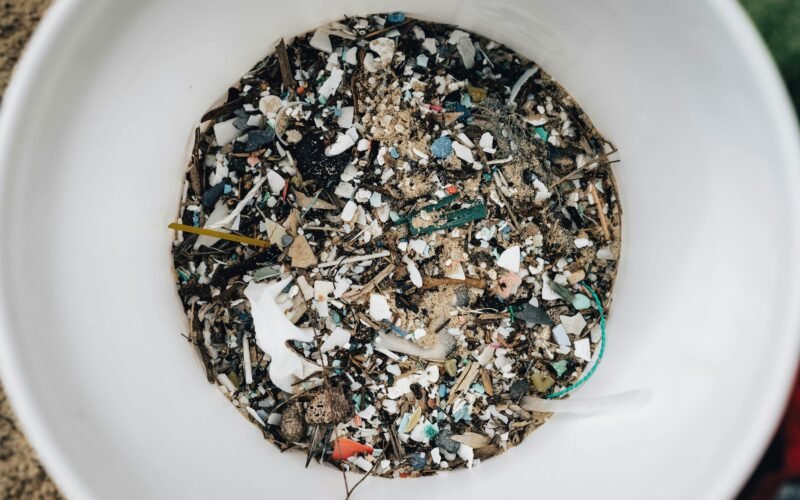


Microplastics have been detected in tap water in every country that has been tested. Up to 87% of global tap water samples contain them. This is what the science actually says — what’s in your water, where it comes from, what we know about the health risks, and what removes it.
Quick answer
Yes — microplastics are almost certainly in your tap water. Studies find them in 83–87% of global tap water samples. Concentrations vary widely depending on where you live, your water source, and the age of your pipes. The health effects are not yet fully understood, but the precautionary case for filtering your tap water is strong. A certified reverse osmosis or NSF/ANSI 401 filter removes up to 99% of them.
What the research actually shows
Microplastics research in drinking water has accelerated rapidly over the past five years. The picture that has emerged is consistent: microplastics are present in tap water globally, at widely varying concentrations, across every country that has conducted systematic testing.
A 2024 systematic review of studies from 34 countries found microplastics in 87% of tap water samples tested, with detected concentrations spanning seven orders of magnitude — from near-zero to over 700 particles per litre depending on location, methodology, and the particle size threshold used. The most commonly detected types were polyester fibres, polyethylene fragments, polypropylene, and polystyrene.
A separate ScienceDirect review found that up to 83% of tap water worldwide contains microplastic fibres, with US tap water among the most contaminated in studies that have included it. A 2018 study by the State University of New York found microplastics in 94% of US tap water samples tested, including samples from the US Capitol building, the EPA headquarters, and Trump Tower in New York.
The WHO reviewed the available evidence in its landmark 2019 report on microplastics in drinking water, concluding that while current concentrations do not appear to pose an immediate health risk, significant knowledge gaps remain and more research is urgently needed — particularly on nanoplastics, which are far harder to detect and study than larger microplastic particles.
Where microplastics in tap water come from
Understanding the sources helps explain why concentrations vary so much between locations and even between households in the same city.
Source water contamination
Rivers, lakes, and reservoirs used as drinking water sources already contain microplastics before treatment begins. They enter surface water from stormwater runoff, atmospheric deposition, synthetic textile washing, tyre wear particles from roads, and the breakdown of plastic waste in the environment. Groundwater sources are generally cleaner but not immune — studies have found microplastics even in aquifer-sourced water.
Water treatment plants — not designed for microplastics
Conventional water treatment — coagulation, flocculation, sedimentation, and filtration — was designed to remove bacteria, viruses, and dissolved chemical contaminants. It removes a significant proportion of larger microplastics as a side effect, but it is not optimised for this purpose and its effectiveness varies widely depending on the technology used.
A 2025 University of Texas at Arlington study found that microplastics are still slipping through treatment plants despite advances in technology, with effectiveness varying significantly depending on treatment methods and how microplastics are measured. The researchers called for standardised testing protocols to get a clearer picture of what’s actually being removed.
Importantly, treatment plants can also add microplastics. The polymeric ultrafiltration membranes increasingly used in advanced treatment systems can themselves shed plastic particles into treated water under certain operating conditions — a finding from a 2025 Water Research study.
Distribution pipes
Even after treatment, water travels through miles of distribution infrastructure before reaching your tap. PVC pipes — widely used in water distribution networks — can shed microplastic particles directly into treated water. Studies examining pipe scale deposits have found microplastics accumulating inside distribution pipes, which can then be released into the water supply.
Older plumbing in homes adds another layer. Lead pipes are a well-documented health risk in older US housing stock, but plastic pipes — including PVC and PEX — shed their own particles. The age and condition of your home’s internal plumbing affects your tap water’s microplastic content independently of what leaves the treatment plant.
Atmospheric deposition
Microplastics have been found in indoor air at concentrations up to 24 µg/m³. Open water storage, open glasses of water, and water left standing can pick up microplastics from the air. This is a minor pathway compared to pipes and source water, but a real one.
How concentrations vary
The range of microplastic concentrations reported in tap water studies is enormous — and often confusing when you read different headlines. Several factors explain the variation:
| Factor | Effect on concentration |
|---|---|
| Particle size threshold measured | Studies measuring smaller particles find far higher counts — up to 10–100x more when nanoplastics are included |
| Detection methodology | Newer techniques like Raman spectroscopy and pyrolysis-GC/MS find particles older methods miss |
| Water source type | Groundwater generally lower than surface water |
| Treatment technology | Advanced treatment removes more than conventional |
| Pipe age and material | Older PVC infrastructure sheds more than newer systems |
| Geographic location | Urban areas generally higher than rural |
| Season | Higher runoff in wet seasons increases source water concentrations |
This variability is why headlines about microplastics in water can seem contradictory. A study finding 4 particles per litre and one finding 700 per litre are both reporting real measurements — they’re just measuring different particle sizes with different methods in different locations.
What types of plastic are found
The most commonly detected plastic types in tap water globally are polyester, polyethylene, polypropylene, and polystyrene. Polyester fibres are almost certainly from synthetic textile washing — they pass through wastewater treatment and enter surface water sources. Polyethylene and polypropylene fragments come from the breakdown of plastic packaging and infrastructure. Polystyrene is used in a wide range of consumer products and food packaging.
The most concerning finding from recent research is the dominance of nanoplastics — particles smaller than 1 micron — in water samples analysed with newer detection techniques. The 2024 Columbia University study that found 240,000 particles per litre in bottled water found that 90% were nanoplastics. Tap water has not been analysed at the same resolution, but the same physical processes that produce nanoplastics in bottled water operate in tap water systems — suggesting current reported concentrations in tap water are likely significant underestimates.
What we know about health effects
This is where honesty matters most. The science on health effects is real but incomplete. Here is what is known and what isn’t.
What we know
- Microplastics have been detected in human blood, lungs, liver, kidney, gut, placenta, testes, and cardiovascular tissue
- Five types of microplastics have been found in human blood including polyethylene, polypropylene, polystyrene, polyvinyl chloride, and polyamide
- Microplastics can act as carriers for chemical additives (plasticisers, flame retardants, UV stabilisers) and environmental pollutants that adsorb to their surface
- Animal studies have linked microplastic exposure to inflammation, oxidative stress, gut microbiome disruption, and reproductive effects
- A 2024 study published in the New England Journal of Medicine found microplastics in the arterial plaques of cardiovascular patients — those with detectable microplastics had a significantly higher risk of heart attack, stroke, and death
What we don’t know
- The specific concentration thresholds at which health effects occur in humans
- The relative contribution of drinking water vs food vs inhalation to total human exposure
- The long-term effects of chronic low-level exposure across a lifetime
- Whether nanoplastics — which can cross cell membranes and the blood-brain barrier — pose different risks than larger microplastics
The absence of proven harm at current exposure levels is not the same as proof of safety. The WHO’s position — more research needed, precautionary measures justified — is the appropriate framing. Reducing exposure where it is cheap and easy to do so makes sense while the science develops.
What water treatment removes — and what it doesn’t
Conventional water treatment is reasonably effective at removing larger microplastics as a side effect of its primary purpose. Coagulation and flocculation — the processes that cause particles to clump together for removal — capture a proportion of microplastics along with sediment and organic matter. Conventional sand filtration catches more.
The problem is nanoplastics. Particles below 1 micron pass through conventional filtration with minimal removal. The processes designed to remove them — ultrafiltration membranes, advanced oxidation — are not universally deployed, and the membranes themselves can introduce new particles as noted above.
Your home water filter is your last line of defence — and it’s the one you have direct control over.
What actually removes microplastics from tap water
The filter type determines almost everything. Here’s the hierarchy:
- Reverse osmosis (RO) — pore size ~0.0001 microns. Removes up to 99% of microplastics including nanoplastics. The gold standard.
- Ultrafiltration (UF) — pore size ~0.01–0.02 microns. Removes most microplastics.
- NSF/ANSI 401 certified sub-micron carbon block — pore size 0.5 microns. Removes a significant portion of microplastics, independently verified.
- Standard carbon filters (most Brita pitchers, fridge filters) — not rated for microplastics. Little to no verified removal.
The key certification to look for is NSF/ANSI 401 — the only standard that independently verifies microplastics removal. Any filter carrying this certification has been tested and verified to reduce particles in the 0.5–1 micron range by at least 85%.
Frequently asked questions
How many microplastics are in my tap water?
It depends significantly on where you live, your water source, and your home’s plumbing. Studies report concentrations ranging from near-zero to over 700 particles per litre in tap water. US tap water has been found to be among the more contaminated in studies that have included it, with 94% of US samples in one study containing microplastics. The true number is likely higher than most studies report, because most studies don’t measure nanoplastics — which require newer, more expensive detection techniques.
Is tap water or bottled water higher in microplastics?
Bottled water is consistently higher in microplastics than tap water in comparative studies. The 2024 Columbia University study found an average of 240,000 particles per litre in bottled water — 10 to 100 times more than older estimates of tap water contamination. The plastic bottle and cap shed particles directly into the water. Filtered tap water is the lowest-microplastic option for most households.
Does my local water utility test for microplastics?
Most US water utilities do not currently test for microplastics, because the EPA has not yet set regulatory limits for microplastics in drinking water. Your annual Consumer Confidence Report (required to be sent to all customers) covers regulated contaminants — microplastics are not yet among them. The EPA is actively developing monitoring requirements and is expected to propose microplastics standards in the coming years.
Does boiling tap water remove microplastics?
No. Boiling kills bacteria and viruses but has no effect on plastic particles. Microplastics don’t evaporate or break down at boiling temperature — they remain in the water or concentrate as water boils off. Only physical filtration removes them.
Will the EPA regulate microplastics in tap water?
The EPA has identified microplastics as an emerging contaminant and is developing monitoring requirements. No federal maximum contaminant level (MCL) for microplastics has been set as of March 2026. Several states are moving ahead independently — California has required microplastics monitoring since 2022, becoming the first state to do so. Federal regulation is expected within the next few years as detection methodologies become standardised and health data matures.
Can I get my tap water tested for microplastics?
Yes — professional lab testing is available through services like Tap Score (simplelabs.com). Microplastics testing is more expensive than standard water quality panels and uses specialist methodology. If you have a well or are in an area with known industrial contamination, testing is worth considering. For most municipal water users, a certified filter addresses the problem without the need for prior testing.
Sources
- ScienceDirect / Global prevalence review (2024) — Global prevalence of microplastics in tap water systems: Abundance, characteristics, drivers and knowledge gaps. MPs detected in 87% of samples from 34 countries.
- ScienceDirect (2024) — Microplastics in water: Occurrence, fate and removal. Up to 83% of tap water worldwide contains microplastics.
- Kosuth M. et al. (2018) — Anthropogenic contamination of tap water, beer, and sea salt. PLOS ONE. 94% of US tap water samples contained microplastics.
- WHO (2019) — Microplastics in drinking-water. WHO Report.
- Qian N. et al. / Columbia University (2024) — Rapid single-particle chemical imaging of nanoplastics by SRS microscopy. PNAS. 240,000 particles/litre in bottled water, 90% nanoplastics.
- University of Texas Arlington / ScienceDaily (2025) — Harmful microplastics infiltrating drinking water. Microplastics slipping through treatment plants despite advances.
- Maliwan T. & Hu J. (2025) — Release of MPs from polymeric ultrafiltration membrane systems. Water Research. Treatment membranes can introduce new microplastics.
- Chu X. et al. (2022) — Occurrence and distribution of MPs in water supply systems: In water and pipe scales. Science of the Total Environment.
- PMC / Drinking water review (2024) — Microplastics in drinking water: quantitative analysis from source to tap. Concentration range 0.0001 to 1247 MP/L in tap water globally.
Some links on this page are affiliate links — we may earn a commission at no extra cost to you. We only recommend products we would use ourselves.